
The Fishing of Bonito in Lesvos
The bonito is one of the most characteristic fish of the Aegean Sea and especially of Lesvos. Every year, fishermen on the island wait for the season when large schools pass through the waters of the North Aegean, bringing with them an intense fishing period and a tradition that has continued for generations.
Fishing for bonito is not only an activity — it is part of everyday life, closely connected with the seasons, the weather and the knowledge passed down from older to younger fishermen.

A fish that travels all year long
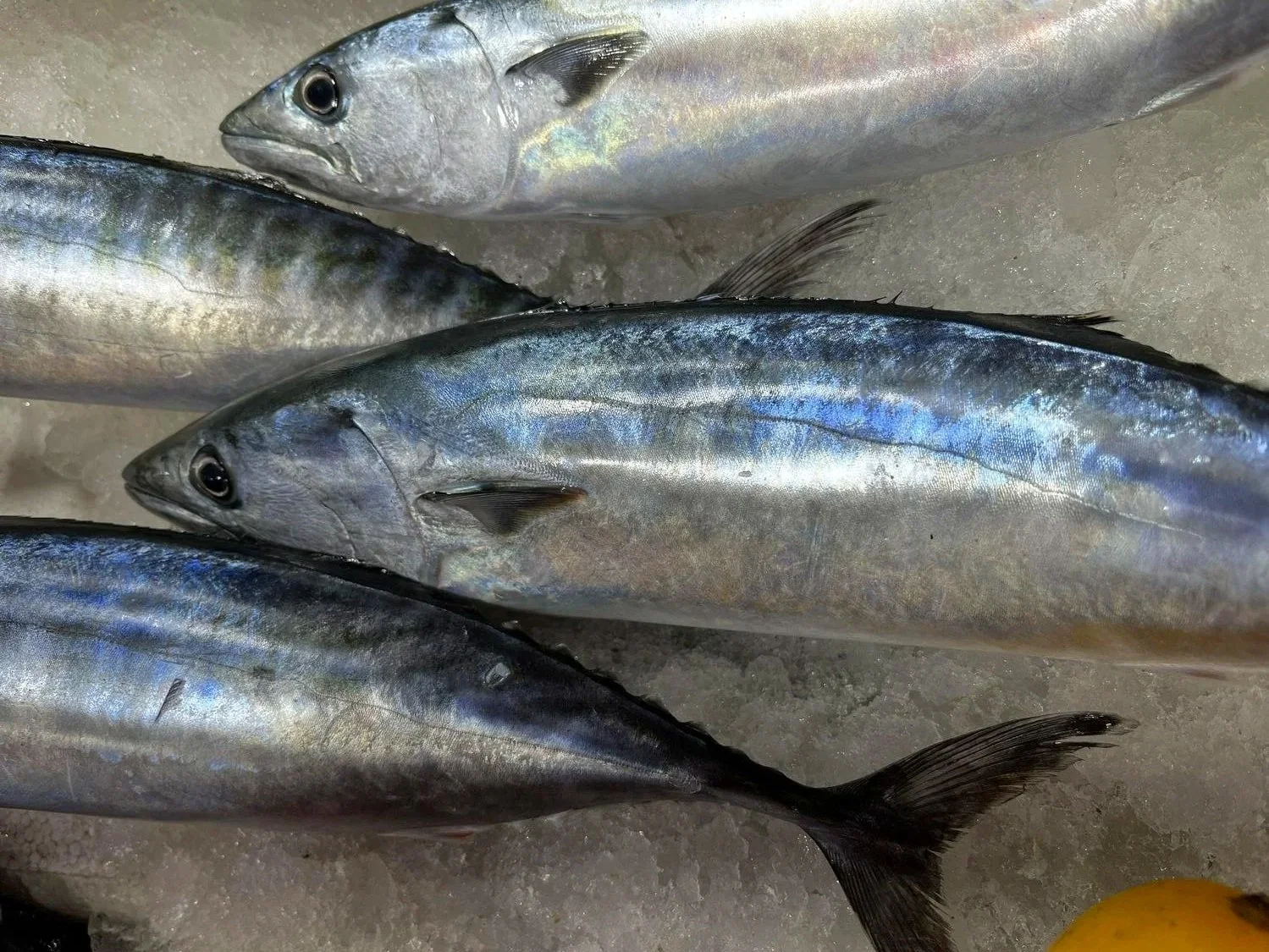
The bonito (Sarda sarda) belongs to the tuna family and is known for its speed, strength and constant movement.
Unlike many other fish, bonito does not stay in one place. It migrates continuously through the Mediterranean and the Aegean Sea, following water temperature and the schools of small fish such as sardines and anchovies that it feeds on.
For the fishermen of Lesvos, bonito is a fish that “comes and goes with the season”. Its appearance around the island follows a natural cycle that repeats every year.
Winter – Moving to warmer waters
During the winter months, most bonito schools move to deeper and warmer waters of the Mediterranean.
In the North Aegean, and therefore around Lesvos, their presence becomes limited. Fishermen say that in winter the fish “stay far out”, making fishing more difficult.
Spring – The beginning of the return to the Aegean
As the sea temperature starts to rise in late spring, bonito begins to move north again.
Part of the population travels towards the North Aegean and even the Black Sea, where food is abundant.
During this period, bonito may appear around Lesvos, but usually in smaller numbers and for shorter periods.
Spring is not considered the main fishing season, although experienced fishermen always keep an eye on the sea for early passes.
Summer – Deeper and northern waters
In summer, many schools stay in deeper or more northern waters where there is more food.
Bonito keeps moving constantly, but it does not always come close to the coast, so fishing around Lesvos is usually limited during this time.
Some years fishermen may see schools even in summer, but this is not the most reliable season.
Autumn – The main season for bonito in Lesvos
Autumn is the most important time of the year for bonito fishing in the North Aegean.
As the water begins to cool, the schools start moving south again.
During this migration, they pass through the straits between Lesvos and the coast of Asia Minor, an area rich in currents and small fish.
This is when bonito appears in large numbers around the island.
The most common areas where fishermen encounter bonito are:
Molyvos
Skala Sykamnias
Petra
the northern coast of Lesvos
the open sea near Sigri
the straits between Lesvos and Turkey
From September to November is considered the best period, and locals often say that during this time “the sea is full of bonito”.
Fishing methods in Lesvos
In Lesvos, bonito is mainly caught from small fishing boats, although sometimes it can also be caught from the shore when schools come very close.
The most common method is trolling, where the boat moves slowly while artificial lures or small fish are pulled behind it.
Because bonito is fast and aggressive, the strike is strong and exciting.
Some fishermen also use live bait, especially when the fish are feeding near the surface.
Bonito in local cuisine
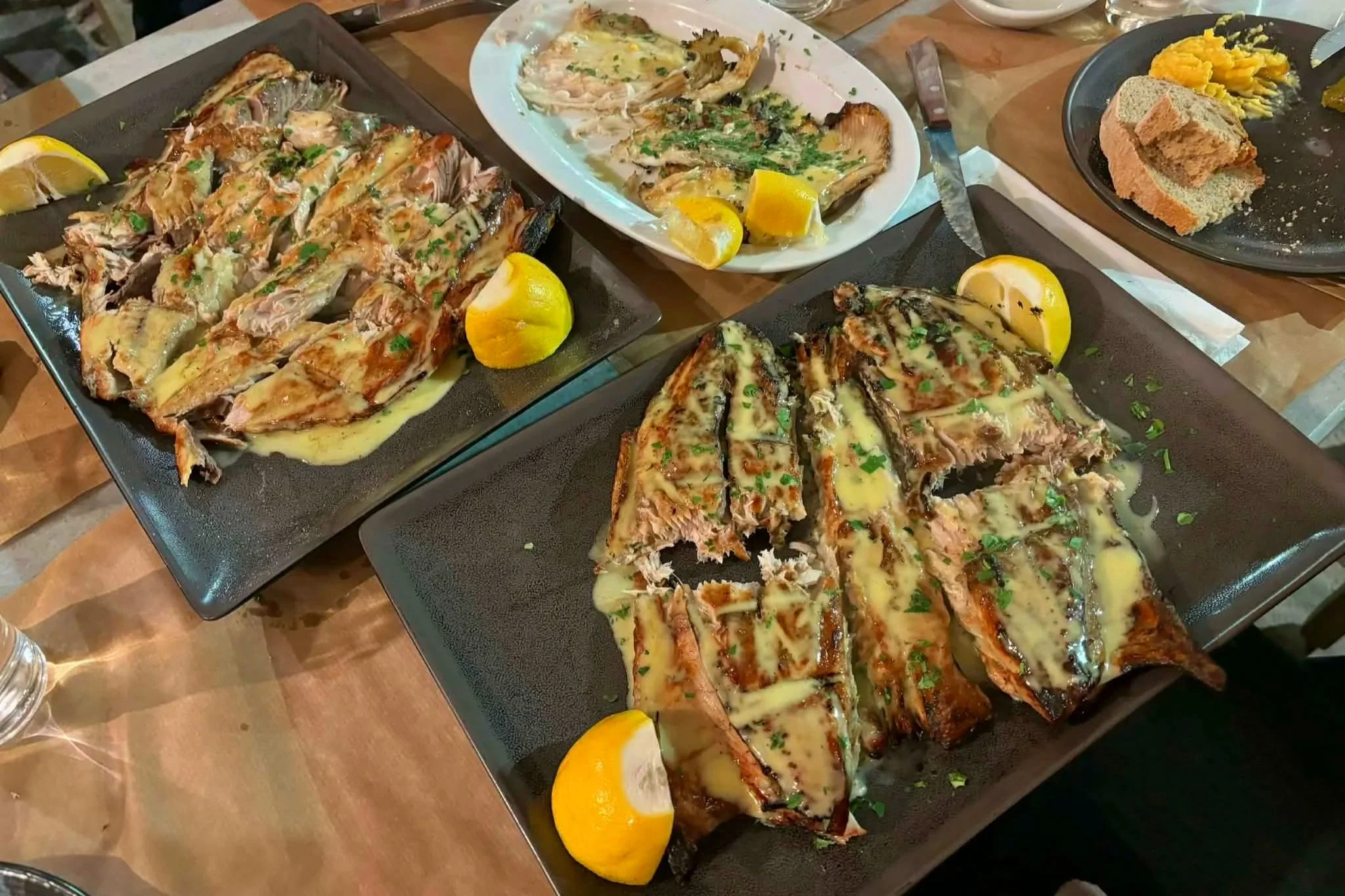
Bonito is one of the tastiest fish of the Aegean and is very popular in Lesvos.
It can be cooked in many ways:
grilled
fried
baked with tomato and onion
marinated
salted and preserved
Salted bonito is a traditional meze and is often served with ouzo, especially during the autumn fishing season.
In villages like Molyvos, Petra and Skala Sykamnias, fresh bonito can often be found in tavernas when the season is good.
A cycle that returns every year
Bonito is not just another fish that passes by Lesvos.
It is part of a natural cycle that repeats every year and that fishermen know well.
Every autumn, when the schools return to the North Aegean, the boats go out to sea with the same expectation as always.
And as long as this journey continues, the connection between Lesvos and the sea remains alive.